Shopping Cart
There are no more items in your cart
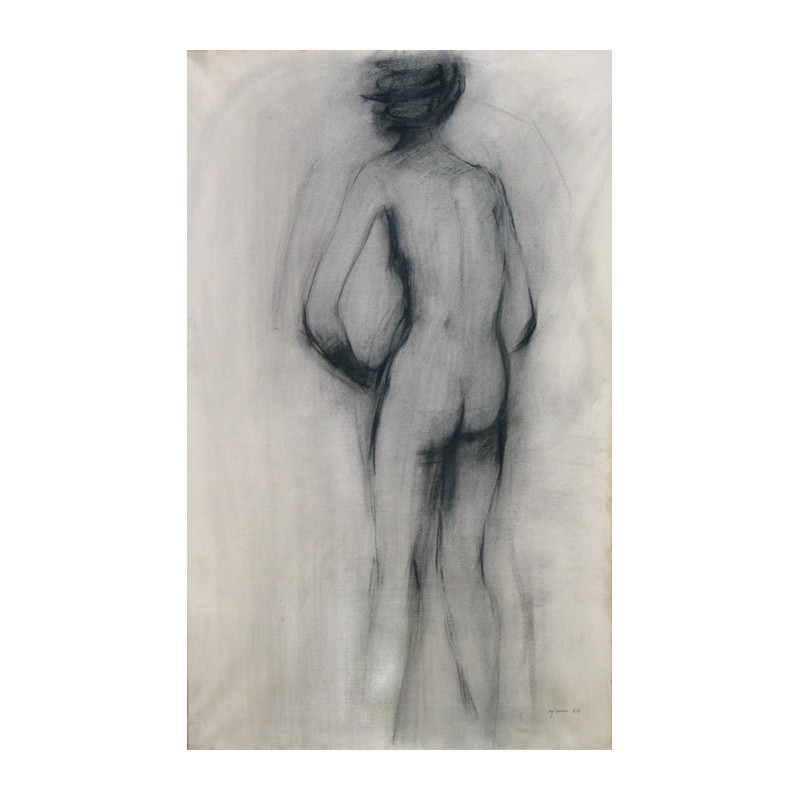
Giuseppe Ajmone (1923–2005) was a prominent figure in Italian art during the post-World War II period, known for his pictorial language of refined sensitivity and deep introspection. Born in Carpignano Sesia, he trained at the Brera Academy of Fine Arts in Milan under masters such as Achille Funi and Carlo Carrà. In the post-war era, Ajmone was an active member of the Corrente movement, and in 1946, he co-signed the Manifesto of Realism (or “Oltre Guernica”), advocating for a Post-Cubist approach influenced by Picasso.
However, by 1949, he shifted away from Realism toward a more lyrical and introspective style, drawing inspiration from masters like Pierre Bonnard and Paul Cézanne. His work focused on three main thematic areas: the still life, the landscape, and the nude. His paintings are characterized by a sublime blend of light and color, where reality is transfigured into an inner dimension. Ajmone exhibited regularly at the Venice Biennale (including a solo show in 1962) and the São Paulo Biennial, and received the prestigious "Senatore Borletti" prize in 1951. He was also active as an editor for cultural magazines and worked as an art consultant for the Einaudi publishing house. He passed away in Romagnano Sesia in 2005.