Shopping Cart
There are no more items in your cart

Giuliano Tomaino (La Spezia, 1945) lives and works in Sarzana.
Active since the late 1960s, he began within the context of Arte Povera, creating assemblages from objets trouvés. In the 1970s he developed a material and narrative approach, using fabrics and found objects to explore themes linked to nature, time, and memory.
From the mid-decade he moved toward sign-based painting, with interwoven black and red lines that would become a constant feature of his language, accompanied by collages made with frayed fabrics.
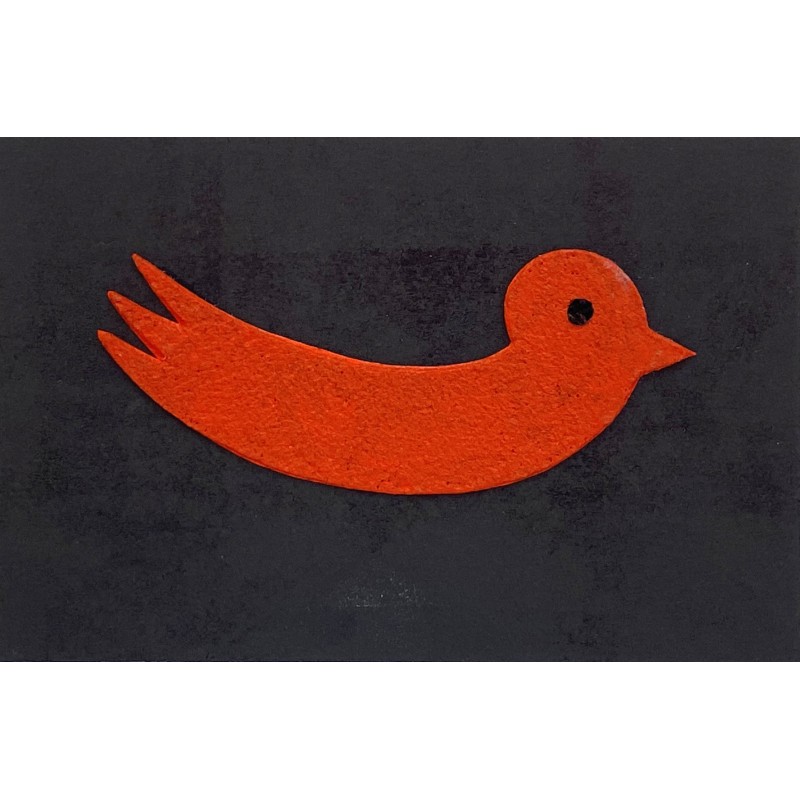
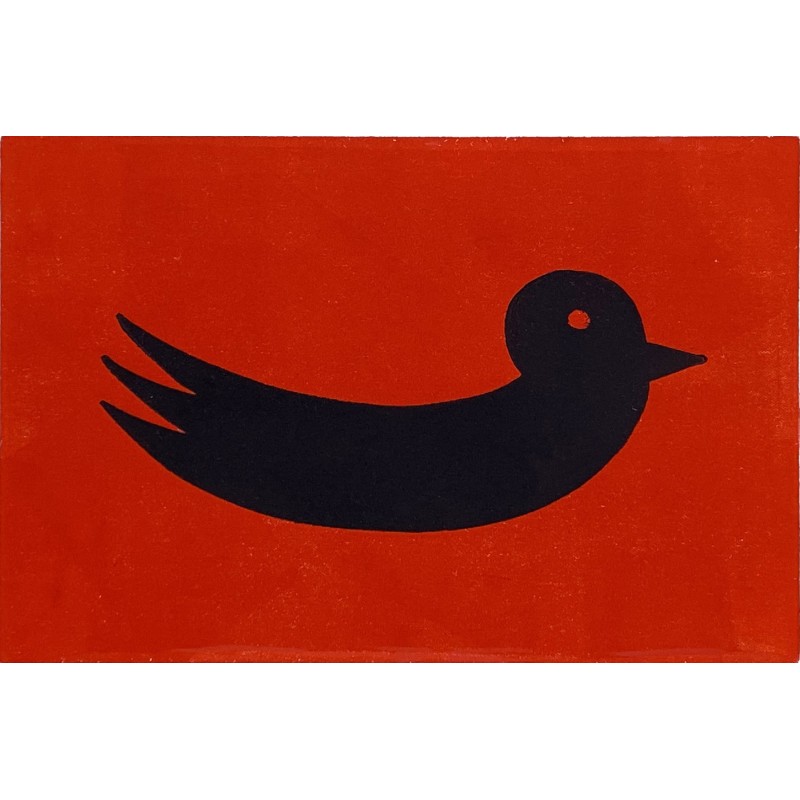
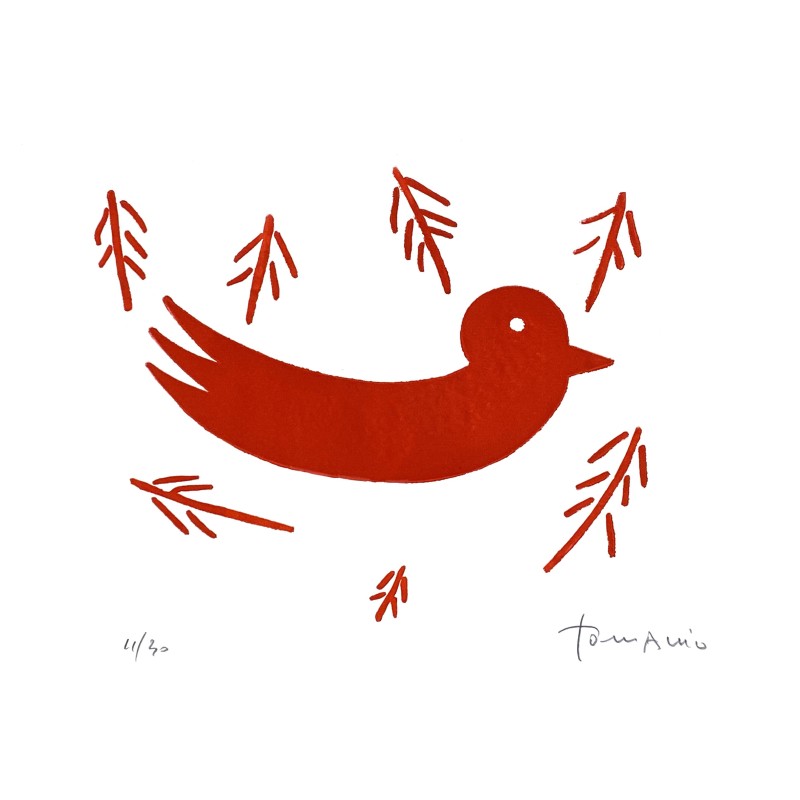
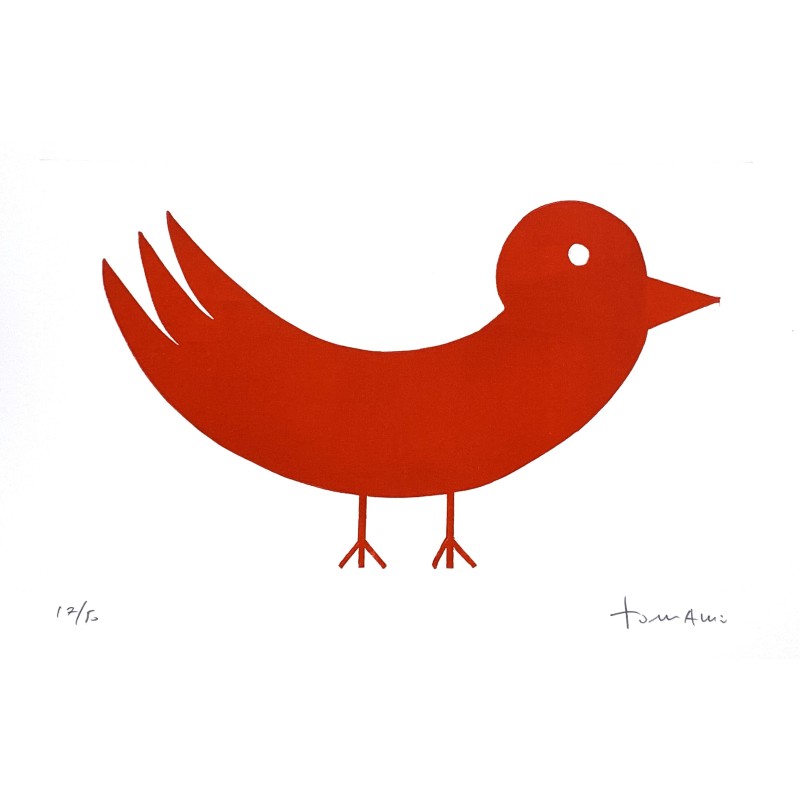
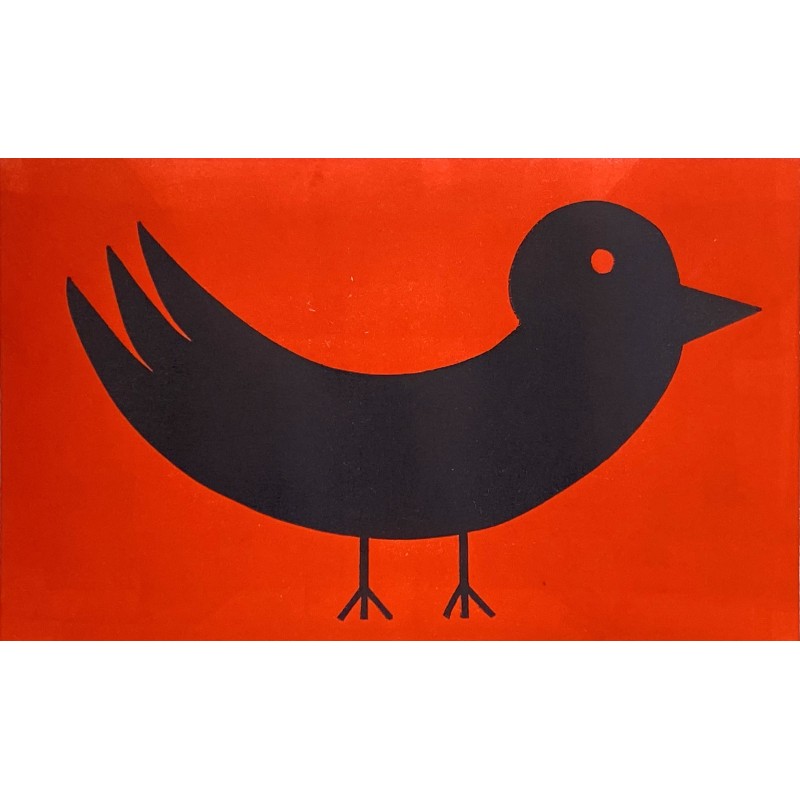
A formative stay in New York in the 1980s broadened his vision: the signs of the Ligurian landscape — mussel-farm poles, jellyfish, clouds, harbors — began appearing in his works. In the 1990s the motif of the cimbello (a bird decoy), inspired by the swallows in his studio, emerged as a key theme, while his exhibition activity intensified in Italy and abroad. These were years marked by dynamic collaborations and his first large-scale installations, which set the foundation for the “macro-dimensional” direction central to his work today.
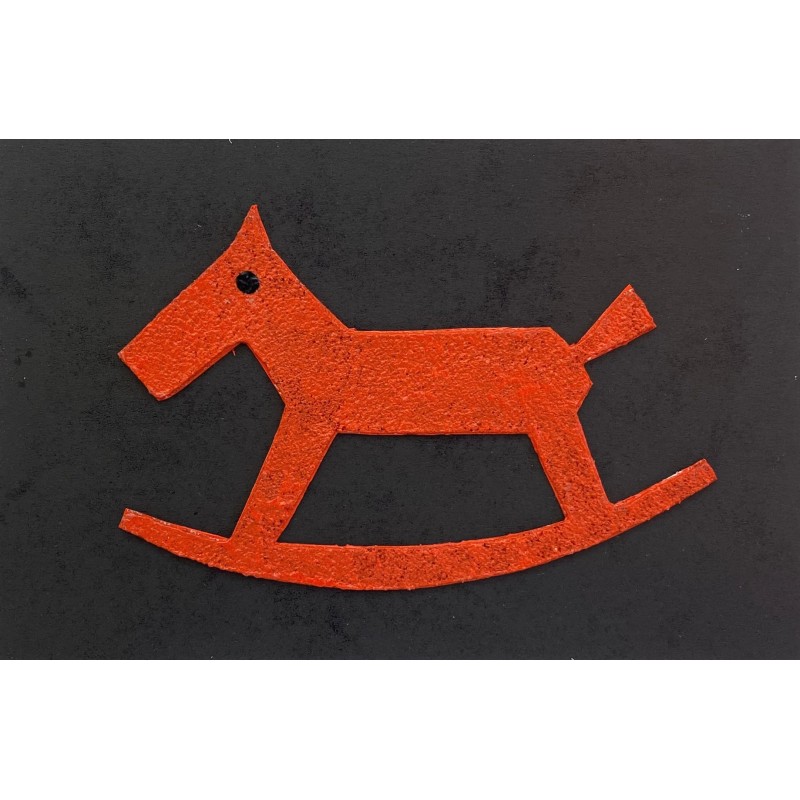
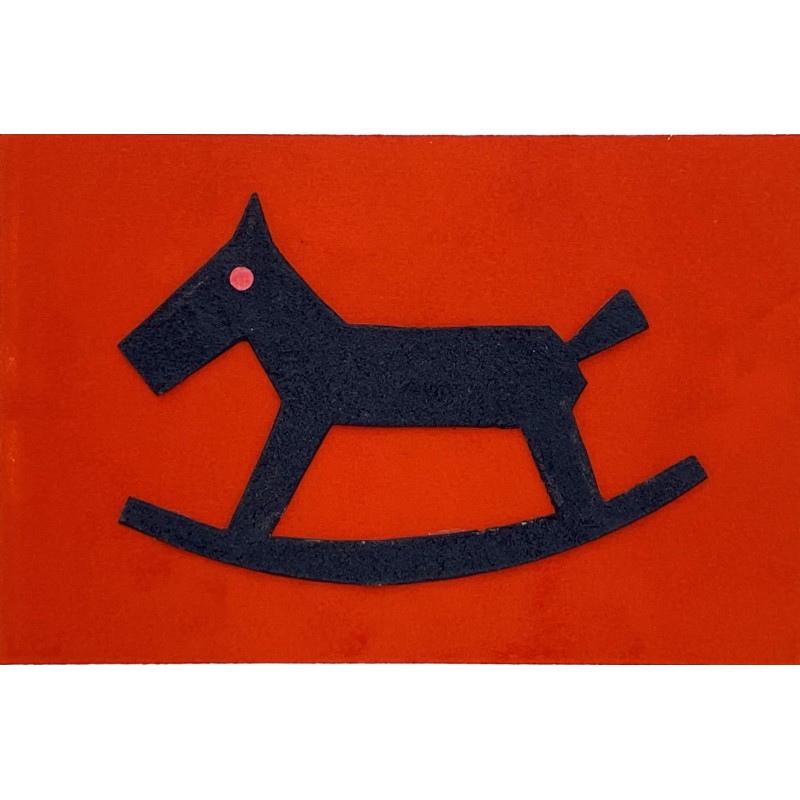
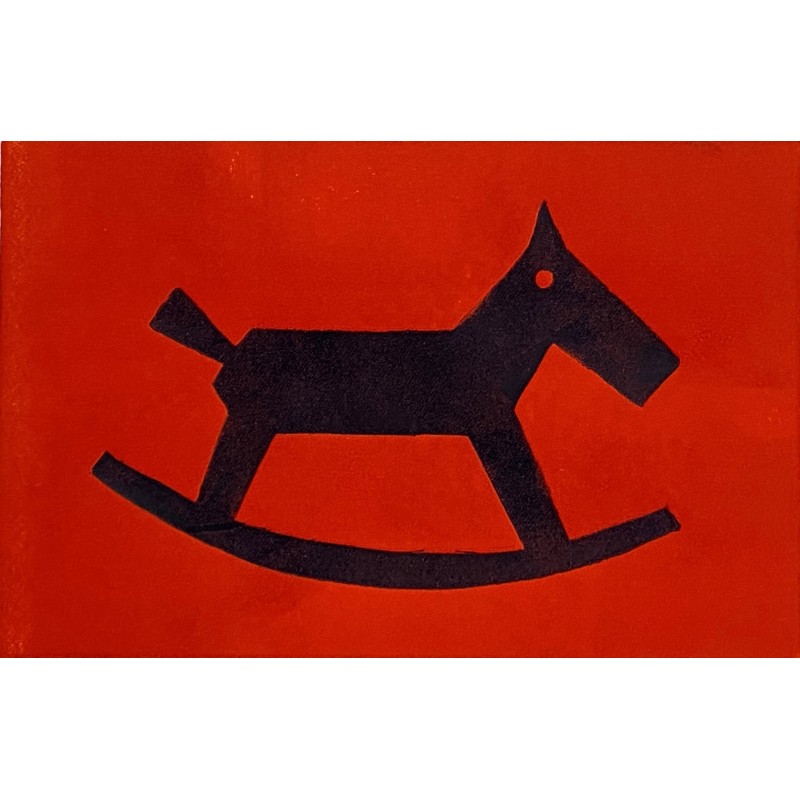
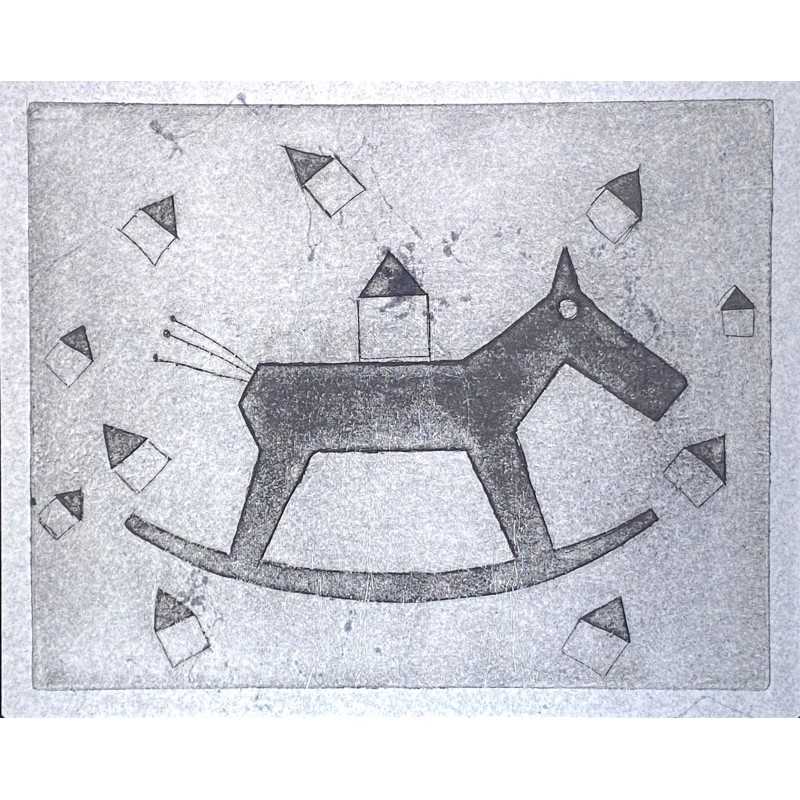
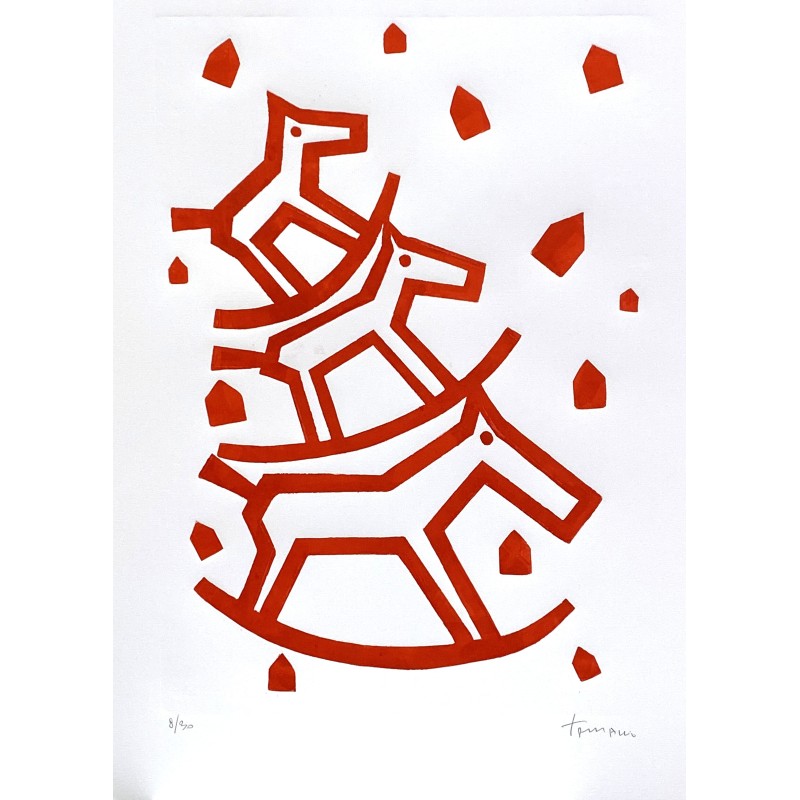
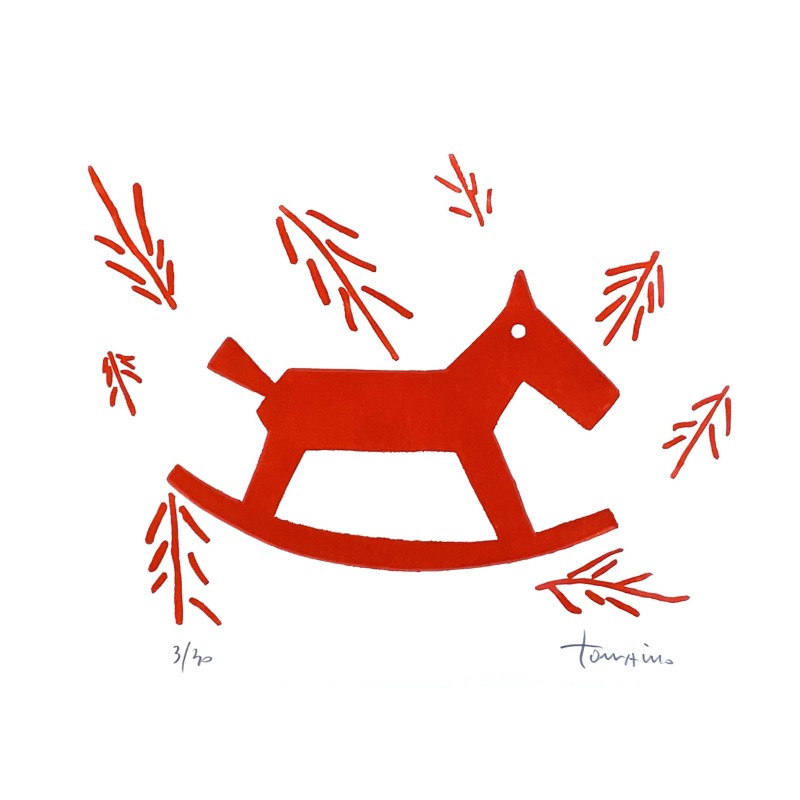
Between the late 1990s and early 2000s he developed new symbols — embraces, rocking horses, hands and feet as ex-votos — and created major public projects and museum installations. His participation in the Dakar Biennale (2002) led to the Abracadabra series and the use of sandpaper as a pictorial surface.
From 2004 he explored the theme of the Houses of Saints, first in painting and later as archetypal sculptures that would become iconic. This was followed by public projects in Italy and abroad, from Florence (Uffizi, 2006) to Rome and Siena, and later in Palestine (2008). In the years that followed he produced large urban installations and environmental works, including Le acciughe fanno la palla (Galata Sea Museum, Genoa, 2009) and the monumental red Sculptures in the City.
Since 2010 he has experimented with transforming hospitality spaces into artist-designed hotels, working alongside the Tomaino’s Factory collective. He took part in the Venice Biennale — Ligurian regional edition — where his beaded Agilulfo became one of the most photographed works. Among his most recognizable public presences is Oplà, at La Spezia’s railway station.
An artist of signs, symbols, and irony, Tomaino places great importance on titles, which “stand beside the work without describing it,” becoming an essential part of his poetic imagination.